politics
Chinese Heavy-Lift Ships Remain Off Northern Norway as German Navy Vessel Patrols Area

Two Chinese heavy-lift vessels, including one sanctioned for its role in Russia’s Arctic LNG 2 project, remain off northern Norway, despite winds having eased substantially. The vessels have been off Andoya for more than 10 days, reportedly to wait out a storm. The presence of a German Navy vessel in the vicinity and the nearby location of the Svalbard subsea cables also raises further questions.

Published
Two Chinese heavy-lift vessels remain off the coast of northern Norway despite a significant improvement in weather conditions, while a German Navy support ship spent several days operating near the vessels adding new questions to vessel activity that Norwegian authorities have so far explained primarily as a case of ships seeking shelter from a storm.
The Ya Qing Hai Yang (IMO 1021570) and Jian Yang Cheng He (IMO 9813137) have been tracked near Andøya in the Vesterålen archipelago since around October 13. The Norwegian Coast Guard previously confirmed that it had conducted inspections aboard the vessels, but authorities have provided few details about the operation or the ships’ intended destinations.
On October 19, Brynjar Stordal, a senior spokesperson for the Norwegian Armed Forces’ Joint Headquarters, reiterated the official explanation for their presence.
“The vessels are still allowed shelter from the ongoing storms in the area,” Stordal said.

However, weather data available through Windy.com showed winds in the area having eased substantially in recent days and recording only around 13 knots on October 23, raising questions about why the vessels have continued to remain there. While improved conditions do not necessarily mean that a ship can safey resume its voyage immediately the duration of their stay now extends beyond 10 days.
The continued presence is particularly noteworthy given the history of the Ya Qing Hai Yang, which was sanctioned by the United States in January 2025 for its involvement in deliveries to Russia’s Arctic LNG 2 project. In October 2024, the vessel transported large power-generation modules from China to the Utrenniy terminal, as uncovered by HNN.
Both Ya Qing Hai Yang and Jian Yang Cheng He traveled from China via the Northern Sea Route during late summer before spending time near Murmansk and the Norwegian-Russian border. Their subsequent movements brought them west along the Norwegian coast to the waters near Andøya. There has been no public confirmation that either vessel is currently carrying cargo destined for a Russian project.
German Navy ship operating near
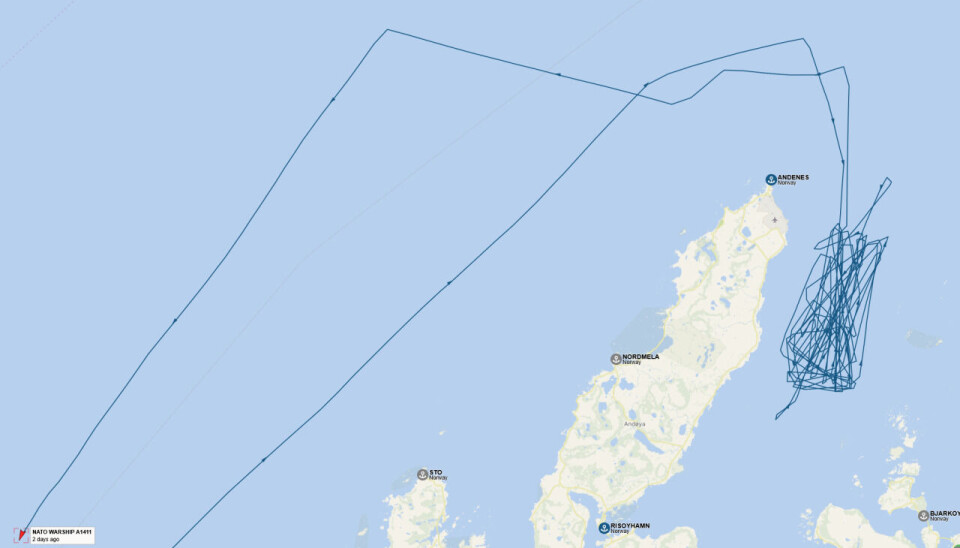
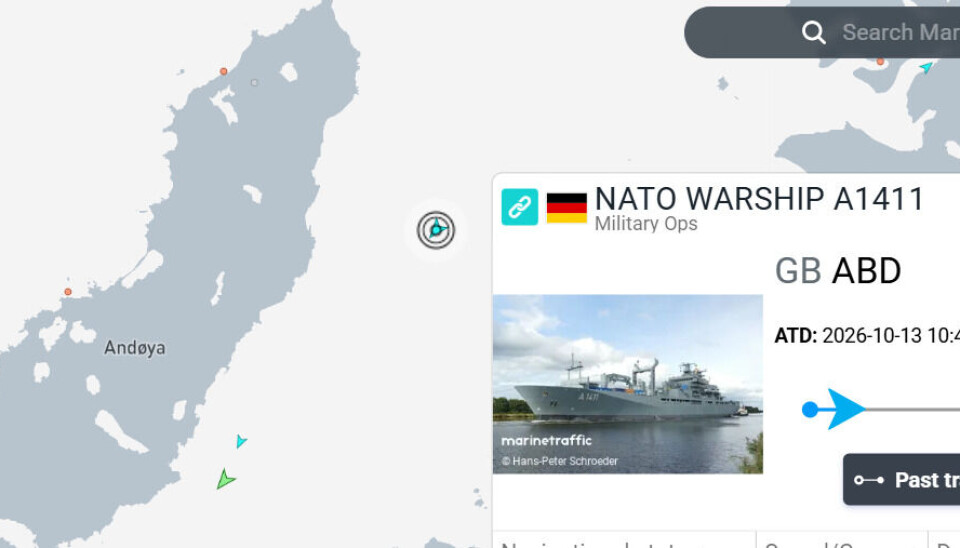
A further development is the presence of the German Navy replenishment ship Berlin (A1411), which arrived in the area from the south and spent several days operating near the Chinese vessels before departing southward again.
Automatic identification system (AIS) tracking reviewed by HNN showed the German vessel repeatedly moving back and forth in proximity to the two heavy-lift ships, making dozens of passes through the area.
Asked about the ship’s presence, a spokesperson of the Deutsche Marine said on October 20.
“The replenishment ship Berlin is part of Standing NATO Maritime Group 1 (SNMG 1). This standing maritime group is primarily responsible for monitoring and protecting strategically important sea routes in the North Atlantic, North Sea and Baltic Sea.”
The statement described the German vessel’s broader NATO mission but did not explain why the vessel had traveled to the waters near Andøya, what its movements there involved, or whether its presence was connected to the Chinese ships.
SNMG 1 operates across northern European waters and conducts a range of maritime security, training, and other missions. The Berlin’s presence in the area therefore does not, by itself, establish that the ship was involved in a specific operation concerning the Chinese vessels. Nevertheless, its arrival and repeated movements near the ships, and subsequent departure are notable developments in an already unusual situation.

Subsea infrastructure adds another dimension
The area is also geographically significant because of its proximity to the Svalbard undersea cable system. The system, operated by Space Norway, consists of two fiber-optic cables connecting mainland Norway with Svalbard. It provides critical communications links for the archipelago, including its satellite ground station.
The mainland connection passes near Andøya, placing the cable system in the same maritime area where the Chinese vessels and the German Navy ship have been operating. It is important to note that there is no public information available linking the vessels’ presence and activity to the cable system. Nonetheless, it is relevant to consider with respect of the strategic importance of the surrounding waters and the NATO maritime forces operating in the area.

Taken together, the Chinese vessels’ prolonged stay in the area, inspections by the Norwegian Coast Guard and the presence of the Germany Navy in proximity of nearby critical undersea infrastructure raises questions whether the activity involves more than a simple prolonged wait for favorable weather.
Read more
-
Russia’s Arctic ‘Shadow Fleet’ Goes Digital as New Putin Decree Tightens Grip on Shipping Data
-
Norwegian Coast Guard Boards Sanctioned Chinese Heavy-Lift Ships Off the Coast of Northern Norway
-
Researcher:
Attention to Unrealised Chinese Projects May Overstate China's Arctic Influence
-
U.S. Sanctions Law Could Upend the EU’s Russian LNG Timeline


