business
“One of the Worst Seasons Ever” for the Cod Fisheries in the Lofoten Archipelago

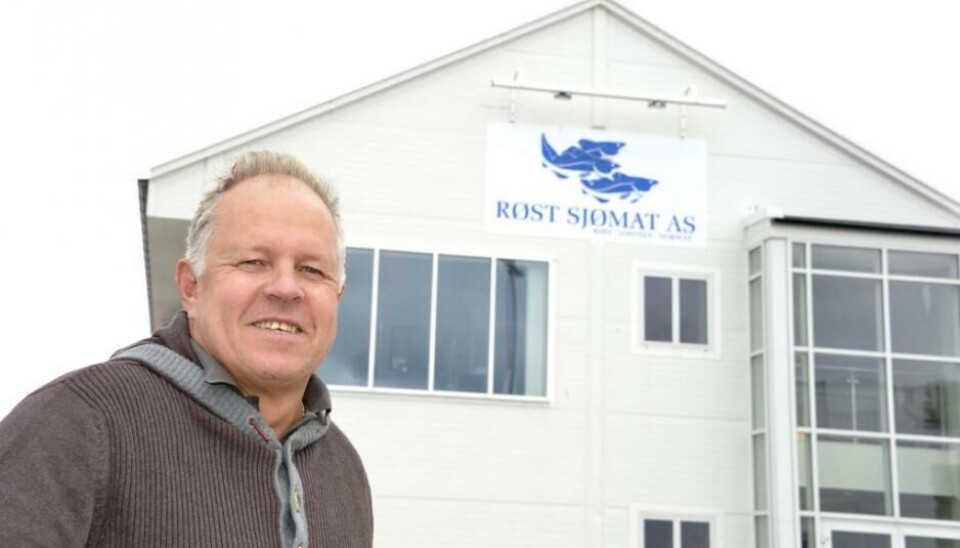
For fishery-dependent communities like the island municipality of Røst, Northern Norway, the poor cod season has hard-hitting consequences. "The authentic fishing villages in Lofoten are disappearing," warns Chairman Geir Børre Johansen at Røst Seafood.


Published
Modified
The winter fisheries off the coast of Norway are well underway, and reports show big landing volumes for the Arctic cod in Troms and Western Finnmark, the northernmost parts of Norway.
In the Lofoten archipelago, which for hundreds of years has been a center for Norwegian cod fisheries, the situation is different.
While Western Finnmark has had a turnover of 20,000 tonnes of fresh cod so far this year, the number for the Lofoten/Salten region is only 5,000 tonnes. Last year at the same time, this figure was about 7,000 tonnes, according to the Norwegian Fishermen's Sales Organization.
"Looking at the landings, this is one of the worst seasons ever," says Lofoten-based Chairman Geir Børre Johansen of Røst Seafood (Røst Sjømat) and Glea AS to High North News.
Røst Sjømat and Glea AS produce stockfish from cod and are among the cornerstone companies in the fishing-dependent island municipality of Røst in Lofoten.
The companies buy cod during the winter fishing season and hang it on drying racks until early summer. Most of it is exported to customers in Italy later in the year.
"It is rare for so little cod to be landed in Lofoten, even when quotas were low at the start of the 1990s. This is a crisis," Johansen adds.
"And likely worse than many headlines would suggest."
A trend to head north
The cod quotas are at their lowest in over 30 years, resulting in record-high prices, which in turn puts fish landing sites and plants under pressure.
Who will be left when the dust has settled?
The figures for Lofoten show that the price per kilo of cod has increased from NOK 73 in 2025 to as much as NOK 101 this year.
The reduced amount of cod affects the entire coast, but has perhaps particularly tough consequences in Lofoten, where there have been reports of less and less cod in traditional areas for several years.
"Easter is soon approaching. Many of the boats no longer dare to wait for the fish to arrive," says Johansen and continues:
"As long as the fish spawn further north, there is a trend to head north to fish. We just have to accept that. We cannot impact the fluctuation; this has happened before as well. However, even in regions such as Western Lofoten, which have always taken a large share of the cod landing, things are looking bleak now."
The experienced fish buyer says it also seems that the fish have gone deeper this year. They simply do not come up to the shore.
"A year for saving"
According to figures from the Norwegian Directorate of Fisheries, about 1,000 tonnes of cod have been landed in the Lofoten municipality of Vestvågøy, Northern Norway, so far this year. In Flakstad, Vågan, Værøy, and Moskenes, the figures are between 1,000 and 1,500 tonnes in each municipality.
In Røst, just under 2,000 tonnes of cod have been landed so far this year, but the figure was several times higher just a few years back, says Johansen.
"All of the Lofoten municipalities are impacted, but particularly Røst and Værøy, which are the two most fishery-dependent communities in Norway, with 56 and 57 percent of their population directly or indirectly employed in the fisheries. It is therefore frightening to think about what ripple effects this will have in the local communities and the business sector at large."
How do you at Røst Seafood and Glea AS notice the situation?
"First, we noticed challenges with the pollock fisheries. In 2024, Glea and Røst Seafood bought 1,800 to 1,900 tonnes of pollock. This year we have bought 400 tonnes. Now we see it with cod. Overall, it will be a year for saving and cost-cutting," notes Johansen.

What do you think about the amount of cod to be hung on drying racks?
"Much less will definitely be hung. We are keeping an eye on the macro picture and see that many uncertainties are hitting at once. A shortage of raw materials, expensive purchase of raw materials, increased freight costs due to higher oil prices, and a stronger currency are not a good mix for us," he states.
What do you think about the stockfish sales in the autumn?
"For now, we don't think much other than that production will be relatively low. It is always interesting to see whether customers accept the price increase on the raw materials. Those who resell the stockfish in Italy may need fish regardless of the price, but there is also a limit to what consumers in Italy can pay, where they are also struggling with inflation and high interest rates."
"Haven't fully realized"
Concludingly, Johansen in Røst Seafood and Glea says that the situation currently affecting several places in Lofoten could become a major challenge.
"The authentic fishing villages in the region are disappearing. There is almost no fish. This is felt throughout Lofoten. And who will be left when the dust has settled?"
"Many politicians in the region have probably not fully realized what is happening. There is often a lot of talk about tourism and other issues, while fish is hardly mentioned."


