science
Climate Change Puts Arctic Tourism Under Pressure: “A complex situation,” Says Researcher
Bodø (High North News): Climate change challenges the Arctic's image as a snow-covered winter paradise, as portrayed in tourism marketing. Researcher Alix Varnajot argues that the industry must change its approach to keep the region attractive as snow conditions become increasingly unpredictable.

Published
Modified
The Arctic is among the regions of the world most strongly affected by global warming. Temperatures are rising, sea ice is retreating, permafrost is thawing and snow conditions are changing.
According to the Arctic Report Card for 2025, published by the US National Oceanic and Atmospheric Administration (NOAA), the period from October 2024 to September 2025 was the warmest recorded in the Arctic since 1900. The past decade also includes the ten warmest years recorded in the region.
The changes have consequences for the tourism industry.
Many tourists travel north expecting snow-covered landscapes, winter activities and the traditional Christmas atmosphere of the Arctic. But when the snow is slow to arrive, destinations find it increasingly difficult to meet the expectations created by their marketing.
"Tourists are expecting guaranteed snow, ice and white landscapes when they come to places such as Lapland, because that is how they imagine what Arctic is all about", Alix Varnajot tells High North News.
From France to Bodø
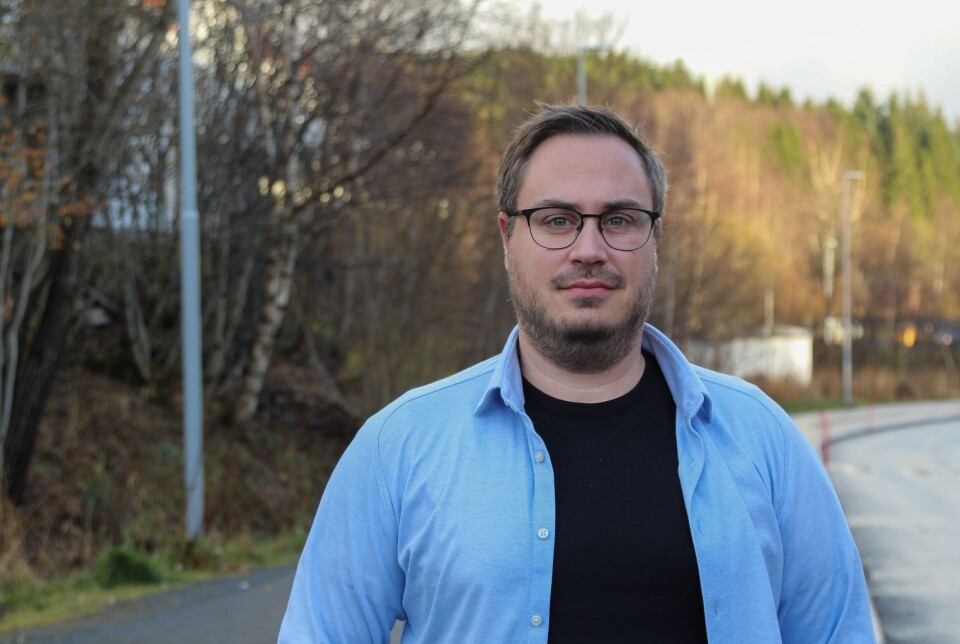
Varnajot is French and holds a PhD in human geography from the University of Oulu in Finland. He recently began as an associate professor at the High North Center at Nord University in Bodø.
His interest in the Arctic began with a curiosity about remote polar regions. During his studies, he specialised in Arctic geography, visited places including Lofoten and Svalbard, and read about polar explorers and expeditions.
His interest gradually developed into research on tourism. He has previously worked at the universities of Lapland and Oulu, where he researched how climate change affects the tourism industry in these regions and vice versa.
"Tourism is connected to issues of climate change, economic development, land-use, Indigenous populations and ethics. This makes tourism very interesting and often topical, especially in the Arctic," he explains.
When the position at the High North Centre was advertised, he couldn't help but apply.
"The Center was looking for someone working on social sciences in the High North, which is exactly what I do through the lens of tourism. So it only felt natural and logical on many levels to apply and move here in case I would be offered the job".
When Lapland became "Crapland"
A mild autumn in Finnish Lapland in 2018 showed just how great the gap can be between tourists’ expectations and the actual conditions in nature.
The snow arrived late, while Christmas tourism was already well under way. Several tourists, particularly from the United Kingdom, returned home disappointed.
British media began referring to Lapland as “Crapland”.
Varnajot believes the incident illustrates a fundamental problem for Arctic tourism: the industry markets a particular image of the Arctic, while reality is constantly changing.
They want to match international tourists' expectations and perceptions of the Arctic in order to satisfy them
Ice fishing, snowmobiling, dogsledding and reindeer activities are among the experiences often considered typically Arctic. The Northern Lights are also commonly marketed with snow-covered landscapes in the background, although the phenomenon can be experienced without snow.
"I think it is lucrative. A lot of tourists are able to travel, and the industry wants to attract them. They want to match international tourists' expectations and perceptions of the Arctic in order to satisfy them."
He believes that disappointment over the lack of snow is often greater than the understanding that it is actually caused by climate change.


Produces artificial snow
There are several solutions when the snow fails to arrive. Artificial snow and stored snow from the previous year can help maintain winter-based tourist attractions.
Several northern locations in Finland have adopted this approach, including Kuopio, Oulu and Kontiolahti.
But it comes at a cost. The solutions require water, energy, electricity and substantial financial resources.
For whom are we developing all these adaptation strategies?
Varnajot believes it is necessary to discuss how sustainable it is to use extensive resources to maintain a particular image of the Arctic.
"The question is also: For whom are we developing all these adaptation strategies? Is it just for tourists, or for the local population as well?"
He emphasises that artificial snow is also used for recreational activities for local residents, but that some measures are funded by public money.
"Artificial snow is sometimes funded with public money, and it is a lot of funding for something that could be used elsewhere in the community."
The future of Arctic tourism
Although the Arctic is getting warmer and periods of snow are becoming shorter, Varnajot does not believe winter tourism will disappear.
He still expects significant ski tourism and natural snow at Arctic destinations, but warns that more places will struggle to maintain winter experiences.

He points, among other places, to Rovaniemi in Finland, where a lack of snow in December could threaten the city's brand as a Christmas destination.
Destinations should therefore promote other seasons and aspects of the Arctic, such as the midnight sun and cultural experiences, he explains.
"The idea is to kind of let go of this dominance of snow and ice associated with the Arctic, and also develop other seasons that are distinctive to the Arctic, more broadly."
He says that some destination companies have already begun doing so, citing Iceland, which is based on geothermal tourism that has nothing to do with glaciers or the like.
"And if we look at Greenland, they are trying to emancipate from this. They had this pioneer marketing strategy a few years back, to draw more attention to Greenland's cultural aspects," says Varnajot.

"A complex situation"
At the same time, his research shows that local tourism operators do not necessarily want tourism all year round. For some, the quieter periods of the year are important for recovering after a busy winter season.
"It is complex and everyone has different opinions about how the problem should be handled."
Nevertheless, Varnajot expects general tourism in the north to grow in the coming years, though not necessarily based on traditional Arctic experiences.
A warmer climate may, however, make northern destinations more attractive in summer. Varnajot refers to the phenomenon of the "coolcation", whereby tourists choose a cooler holiday over summer destinations further south in Europe.
"There might be more tourists seeking fresher climates, escaping Mediterranean region and travel to the Nordic countries in summer for example".
High North News is an independent newspaper published by the High North Center at the Nord university. High North News follows the Norwegian Press Code of Ethics and is edited according to the Association of Norwegian Editors – Rights and Duties of the Editor.


