opinions
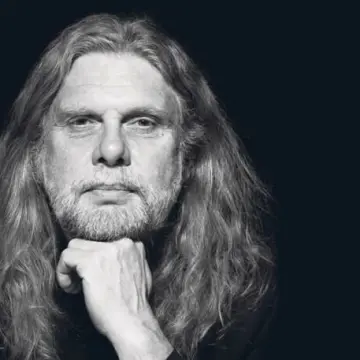
Arne O. Holm comments:
Trump, Putin and Xi Made History, But Does it Make the World a Safer Place?

Commentary: Donald Trump is making history as he sits on the laps of Russia’s Vladimir Putin and China’s Xi Jinping. But does this make the world a safer and more democratic place?
Published
Modified
This is a comment written by a member of the editorial staff. All views expressed are the writer's own.
I am a staunch supporter of diplomacy and dialogue across ideologies and national borders.
As when Norwegian Prime Minister Jonas Gahr Støre and Finnish President Alexander Stubb spoke by phone with Vladimir Putin in late October.
Einar Gerhardsen
Without any particular fuss being made about it, Støre followed in the footsteps of a former Norwegian prime minister, Einar Gerhardsen. During the Cold War, in November 1955, Gerhardsen met with Nikita Khrushchev in Moscow.
Joseph Stalin had died a few years earlier, and Einar Gerhardsen was the first prime minister from a NATO country to travel to the Soviet Union during the Cold War. Among other things, the meeting marked the beginning of Norwegian-Russian cooperation on fisheries, a partnership that remains a quite unique channel for collaboration between Norway and Russia.
Støre follows in Gerhardsen's footsteps.
The 1950 visit received a mixed reception, much like the telephone conversation that Stubb and Støre held with Putin. The latter encountered official opposition from Danish Prime Minister Mette Frederiksen.
In the 1950s, it was primarily the United States that questioned the wisdom of Gerhardsen’s initiative. The concern was that Russia might succeed in pressuring Norway and splitting NATO, a fear that, in hindsight, proved to be unfounded. It is worth noting in this context, especially when viewed in light of the current situation, that Norway had carried out quite thorough preparatory work among its allies.
A community of fate
The then-Minister of Foreign Affairs, Halvard Lange, gave assurances in meetings with both the United States and other NATO countries that Gerhardsen’s visit would deal exclusively with bilateral relations between two nations destined to share a border and a sea in the north.
As stated, I am an incurable advocate of diplomacy and dialogue.
Nevertheless, yesterday’s meeting in China gives no cause for optimism.

Three states, two of which are governed according to dictatorial principles, while the third has turned its back on what we traditionally associate with democracy. Trump and the United States did not consult their NATO allies beforehand, nor did they involve Ukraine, a topic that was on the agenda for the meeting between Putin and Trump.
Then add Donald Trump’s total strategic inferiority when facing Russian and Chinese leaders. Trump is driven solely by a narcissist’s need to be seen. His track record includes attempts to seize Greenland from Denmark, threats to withdraw from NATO, a coup d’état in Venezuela, and an ongoing war against Iran. A list of "achievements" he apparently believes will impress a Russia that continues its brutal attacks on the civilian population in Ukraine, and a China that is setting its sights on taking over Taiwan.
Europe and the High North
This time, the fear is not that the US might allow itself to be pressured, as was feared regarding Norway back in the 1950s, but rather that Trump, in his incompetence, might enter into agreements that affect far more states than just those directly involved. Not least Europe and the High North.
The hope must therefore be that Donald Trump returns home empty-handed.
Fortunately, so far it appears that he will.
If so, a historic meeting is reduced to a story about a political fool.


