politics
Arctic Security Conference 2026:
"Hybrid Threats at Sea in The Arctic Have Become a Greater Problem"

Oslo (High North News): This year's Arctic Security Conference focuses on maritime security threats in the region, particularly hybrid activities. "For the first time in the Arctic security debate, hybrid threats at sea are identified as the greatest challenge", says Andreas Østhagen, research director at FNI.
Published
Modified
"I am most concerned about hybrid threats. In a fraction of a second, an undersea cable or pipeline can be damaged. In a fraction of a second, an entire country can be disconnected, as in the case of Iceland and Greenland. Svalbard is another example. However, repairing the damage takes far longer."
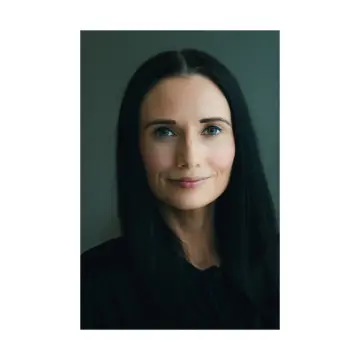
Claude Véron-Réville, the EU's Special Envoy for the Arctic, said this at the Arctic Security Conference in Oslo, Southern Norway, hosted by the Fridtjof Nansen Institute (FNI), on Wednesday.
Her words resonate strongly with the reason why this year's conference addresses maritime security and hybrid threats at sea in particular.
"For the first time in the Arctic security debate, hybrid threats at sea are being identified as the greatest challenge. The various acts of sabotage in the Baltic Sea have made it clear that the Arctic is vulnerable too", Andreas Østhagen, Director of Research for Oceans and the Arctic at FNI, tells HNN.
"This is also a research-driven conference, and we have received funding from the Research Council of Norway to conduct research on maritime hybrid activities in collaboration with the Coast Guard and others. In addition, the major research program "Arctic Ocean 2050"—which examines the consequences of ice melt—was launched this year. It was therefore natural to focus on maritime security."

The Earth's ‘heart’
At the close of the conference, Østhagen highlights some key points from the various panel discussions.
"A key point raised in the panel discussion on an ice-free Arctic in 2050 is that the melting of the ice gives rise to a range of problems—operational and practical, certainly, but also existential. It was noted that the melting ice in the Arctic Ocean can be viewed as a vital organ that is dying."
Østhagen refers specifically to the commentary by climate and human rights journalist Brett Simpson:
“We ought to question the language we use. We often speak of the Arctic Ocean and the Arctic ice much like a sick, elderly aunt whom we visit to pay our respects, while simultaneously eyeing the silverware in the cupboards and thinking about our inheritance. A better metaphor, however, is to view Arctic sea ice as a vital organ for our planet. It plays a crucial role in ocean circulation and acts, in a sense, as the ‘heart’ that keeps things running,” Simpson argued.

Scope for action towards Russia?
“Conflicting views emerged during the panel discussion on hybrid threats at sea. It was pointed out that one way to handle hybrid threats is through diplomacy, and that we need to talk more with Russia to avoid misunderstandings. Situations can arise where intentions are misinterpreted and unintended escalation follows,” says Østhagen, adding:
"At the same time, it was also quite evident during this session that hybrid threats at sea in the Arctic—such as acts of sabotage—have become a greater problem, and something we must actually be able to handle as a society."
This gives rise to some interesting questions, according to Østhagen.
"Is there any point in attempting diplomatic efforts and keeping channels open at a purely practical or political level? What scope for action do we have vis-à-vis Russia to try to avoid escalation and accidents? Are we stumbling into a blind spot because we are so focused on showing solidarity with Ukraine? These are both important and sensitive issues."

The Atlantic as a ‘pond’
Østhagen also highlights the final panel discussion on how maritime security threats in the Arctic are managed, with input from politicians, the coastguard and the armed forces.
"The conversation became quite technical at times, covering both defense policy and operational matters, but the key point is the transatlantic link and the fact that everything must be viewed in context. As was pointed out, one can view the Atlantic as an ocean or a "pond." The pond metaphor illustrates just how interconnected the situation is."
“I think many people in Norway do not fully grasp the importance to the UK, the USA, and France of what the Russians have on the Kola Peninsula and the operations they conduct from there. That is why the British Navy’s head of operations and the US Coast Guard’s Arctic district commander are coming here to discuss maritime security threats,” says the researcher.
He is referring specifically to Russia's submarines—both the strategic nuclear-armed submarines and specialized submarines linked to Russia's Main Directorate for Deep-Sea Research (GUGI).

Reflects enormous interest
The Arctic Security Conference was held for the first time in 2024, and participation has increased significantly over the years. Since last year alone, the conference has grown from 200 to 400 participants.
“This partly reflects the fact that we moved to a larger venue for this year’s edition. At the same time, the high level of participation speaks to the immense global interest in the High North and the Arctic. While many of the participants are based in Oslo, a significant number fly in from other countries—particularly North America,” Østhagen points out.
Understanding the complexity
What do you hope the audience will take away from the conference?
“An understanding that the topics we are discussing regarding security policy in the Arctic are incredibly complex. Because the geography, climate and threat landscape varies,” the researcher says, and continues:
"It is easy to oversimplify things, as Donald Trump does when discussing why he wants Greenland, or as some do when claiming there is a race for resources in the Arctic. As the Arctic rises on the international agenda, we need to move beyond these simplifications. We must understand that the Arctic is a vast and incredibly complex region."
Watch the full conference here.


